The US and the Israeli regime launched a large-scale unprovoked military campaign against Iran following the assassination of Leader of the Islamic Revolution Ayatollah Seyed Ali Khamenei, along with several senior military commanders and civilians on February 28.
The attacks have involved extensive aerial strikes on both military and civilian locations across Iran, causing significant casualties and widespread damage to infrastructure.
In response, the Iranian Armed Forces have carried out retaliatory operations, targeting American and Israeli positions in the occupied territories and at regional bases with waves of missiles and drones.
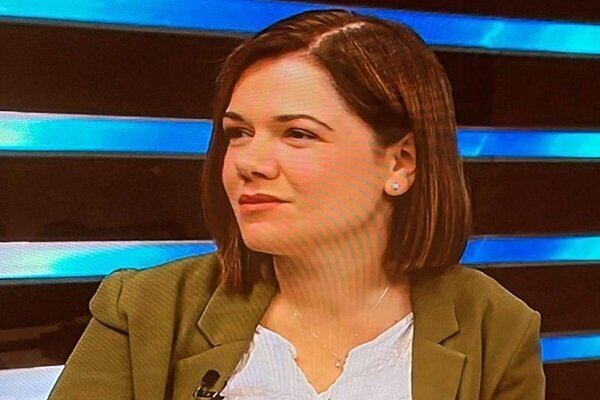
To know more about the miscalculation of the US President, TABNAK reached out to Assist. Prof. Dr. Hazar Vural, in Istanbul Aydin University.
Here is the full text of the interview with her:
Trump claims that he is negotiating with Iran for cceasefire. If this true and considering the fact he said Iran must surronder unconditionally at the begining of the aggression on Iran. How do you assess his success in acheiving his goals?
In this war, which lacks any legitimate justification, Washington is losing money and reputation. Given the reality that starting a war is easy but ending it is difficult, and having failed to secure the support it expected from other countries, a global deadlock is now unfolding in the Persian Gulf. Both the cost of this war and the disruptions to global trade routes will be borne by the US, the party that initiated the conflict. The war is continuing not only through energy facilities but also against a wide range of targets; from Trump’s perspective, energy is being used as a card—indeed, he had ordered attacks on many locations on the island of Hark whilst claiming not to have touched the pipelines. However, this is an extremely risky and unlawful game. Because Iran’s patience has now run out, and it is resorting to force. Given the attacks currently taking place in Iran—including damage to various infrastructure, the bombing of strategic assets, damage to cultural heritage, and attacks on civilians warranting war reparations—it will not be easy for Trump to extricate the US from the situation he has brought it to. Moreover, one might even expect him to say or do the opposite within a day.
Trump claims that he is negotiating with Iran for cceasefire. If this true and considering the fact he said Iran must surronder unconditionally at the begining of the aggression on Iran. How do you assess his success in acheiving his goals?
Diplomacy can always continue in various forms and through various means. However, whilst attacks on Iran are currently ongoing, there appears to be no space in which negotiations can take place, particularly under conditions of coercion and preconditions. US President Trump is seeking an administration capable of devising strategies and utilising its resources, but he cannot find this in Iran.
A country with a strong sense of state and societal consciousness, and a robust national identity, cannot be expected to discuss matters concerning its own governance or future, or strategic issues, whilst engaged in a struggle against an attacking enemy, particularly whilst under attack. Furthermore, in Iran, assassinations and attacks have been carried out against many figures within the decision-making circles who were open to negotiation. Moreover, Iran was attacked whilst at the negotiating table. Iran is not a state that can be shaped by the US.
If Iran and the US decide to end the war, will Israel respect the US decision?
This is the fundamental issue. In other words, Israel’s expansionism and its ambition to reshape the entire region, its states and their governments to suit its own ends, not only jeopardises regional security but also fuels a general arms race. Israel’s attacks in many parts of the region, carried out in line with its strategic objectives, constitute an assault on the sovereignty of states; the normalisation of the disregard for the rule of law, the power vacuums created, and the resulting risks pave the way for even greater problems. This is having a negative impact on the present and future of the communities living in the region. Values gained after centuries of war are being lost through arbitrary corruption. Given that Israel will not abandon its goal of dividing Iran, and although the US may not be able to sustain this war for long during a mid-term election year, Israel will continue its provocations in line with its objectives.
How do you assess the public opinion in Turkey towards the US- Israeli aggression on Iran?
The Turkish public has been responding with great sensitivity to all of Israel’s attacks in Palestine and the region, particularly since the war of genocide in Gaza. In particular, campaigns are being organised to provide humanitarian aid to Palestine, and civil society groups are constantly holding demonstrations in support of Gaza. Demonstrations condemning Israel and showing solidarity with Palestine are a common cause for the entire society.
Furthermore, when war was declared on our neighbour Iran last summer and this February, the issue was closely monitored not only by the state but also by society, and calls were made for the war to be stopped immediately.
The fact that Israel’s reckless and unlawful attacks constitute a crime from a humanitarian perspective, as well as their multifaceted impact on the regional economy, is a matter closely monitored with great sensitivity by Turkish society. Furthermore, participation has been provided in joint humanitarian initiatives demonstrated globally and in movements such as the Sumud flotilla.


