US and Iran hold nuclear talks amid threats of regional war on Friday in Omani capital Muscat.
Iran's top diplomat Abbas Araghchi said on Friday that nuclear talks with the U.S. mediated by Oman were off to a “good start” and set to continue, in remarks that could help allay concern that failure to reach a deal might nudge the Middle East closer to war.
But Foreign Minister Abbas Araqchi said after the talks in the Omani capital Muscat, which involved him, U.S. special envoy Steve Witkoff and U.S. President Donald Trump's son-in-law Jared Kushner, that "any dialogue requires refraining from threats and pressure. (Tehran) only discusses its nuclear issue ... We do not discuss any other issue with the U.S."
US President Donald Trump also said the United States had “very good talks” with Iran after delegations from both countries participated in indirect discussions in Oman Friday.
“Iran looks like it wants to make a deal very badly. We have to see what that deal is,” the president said on Friday.
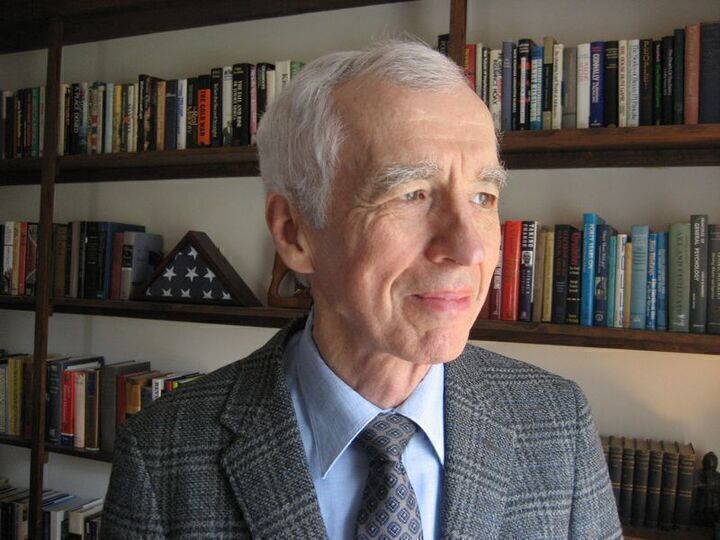
To shed more light on the issue, TABNAK reached out to Professor Paul Pillar former CIA intelligence analyst to shed more light on the issue.
Following is the full text of the interview:
Iran and the US talks were held in Oman. Iran's Foreign Minister assessed the atmosphere as positive and stated that if this process continues, reaching a framework for an agreement is possible. What is your assessment of the negotiations?
Having had a big gap in U.S.-Iranian diplomacy since the war last June, probably any face-to-face meeting like this that did not end in a walkout by one side or the other could be considered positive. Yes, reaching a framework for an agreement is possible, although there is significant distance between the two sides yet to be bridged, on uranium enrichment, ballistic missiles, and Iranian relations with nonstate groups in the region.
The Omani Foreign Minister described the negotiations as very serious. It is said that the parties are seeking to achieve a result. Why has the United States chosen the diplomatic path?
Trump probably prefers reaching some kind of agreement that he can count as a success and as a supposed peace accomplishment on his part. Even Trump must be aware of the downsides and risks for himself of a new war. But he has not chosen definitively one path or another. He will wait to see what kind of flexibility Iran shows.
In the US negotiating team, Brad Cooper, the commander of CENTCOM, was present. This is considered an unusual act. What was the reason for his presence?
His presence was a way of saying that the United States still retains the military option.
Do you think these negotiations will yield results?
I think there is a slightly better than even chance that some kind of understanding or agreement will result, although not quickly. Trump has a record, on different issues with different countries, of claiming a successful negotiation even when what was reached was only a vague understanding, without firm commitments. I do not think we will see anything comparable to the detail and level of commitment that the JCPOA represented. Instead, there might be something more like some of the trade "agreements" that Trump has reached, which will have vague terms that each side will interpret in its own way. That sort of vagueness might be enough to appear to bridge some of the remaining substantive gaps.


