Iranian military forces are prepared to "immediately" retaliate against any U.S. attack, Tehran's top diplomat warned on Wednesday, as more American military assets arrived in the region and U.S. President Donald Trump threatened to launch a new attack on the country.
Meanwhile, Iran and the United States are to hold a high-level nuclear meeting in Oman this Friday, mediated by Turkish President Recep Tayyip Erdogan.
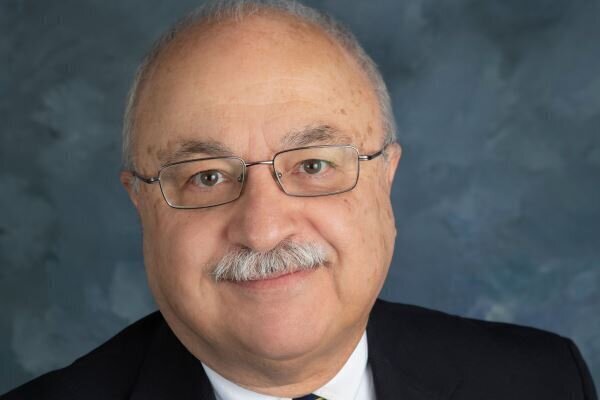
To know more about the developments, TABNAK reached out to Nader Entessar, professor emeritus of political science from the University of South Alabama for an interview.
Following is the full text of the interview:
Turkey has acted as a mediator between Iran and the United States, and negotiations between Tehran and Washington are set to be held on Friday. Why did the United States choose diplomacy?
I don’t think the term “diplomacy” is the appropriate word to use when it comes to explaining recent talks between Washington and Tehran. What Washington refers to as diplomacy is an amalgam of talks, military pressure, and constant demand for a zero-sum game. I am afraid we will witness a similar trend in Istanbul to what took place in the previous rounds of U.S.-Iran talks, during which Washington demanded Tehran’s near-total capitulation to its demands. As I had mentioned in my previous interviews, the U.S. believes, rightly or wrongly, that Iran is internally and regionally weak and thus it will ultimately concede to what the Trump administration desires.
In addition to Turkey, other countries also expressed readiness to mediate during the escalation of tensions between Iran and the United States. Why was Turkey chosen as the mediator?
Donald Trump and Recep Tayyip Erdogan maintain a strong, personal, and transactional relationship, often bypassing traditional diplomatic channels to manage U.S.-Turkey tensions. Their bond is characterized by mutual admiration. Trump has described his relationship with Erdogan as "very good," often praising him as a "tough" leader, fostering a partnership that thrives despite some policy, bureaucratic, and congressional friction. Furthermore, Trump views Erdogan as a key intermediary in negotiations for the wars in Ukraine, Gaza, and other regional conflicts. These may be some reasons why Turkey was chosen as the mediator in the upcoming U.S.-Iran talks.
It has been announced that Iran’s enriched uranium may possibly be transferred to Russia, and Moscow had also expressed readiness in this regard. Some members of the Iranian parliament had stated that during Ali Larijani’s visit to Russia, an agreement may have been reached on transferring Iran’s enriched uranium to Russia. Nevertheless, Ali Bagheri Kani, Larijani’s deputy, stated that Iranian officials have no intention of transferring enriched nuclear materials to any country and that the negotiations are not at all focused on such an issue. Could the United States agree to such a matter?
This is an idea that has been around for several years. Given the past experiences and current conditions, I don’t think either Washington or Tehran will agree to the transfer of Iran’s enriched uranium to Moscow. There doesn’t appear to be any quid pro quo for Iran.
Hakan Fidan, Turkey’s foreign minister, said at last Friday’s meeting with his Iranian counterpart that any potential negotiations would cover various issues and proceed on an “issue-by-issue” (step-by-step) basis. The Financial Times also reported on Monday that negotiations between Washington and Tehran would, in the first stage, be limited to the “nuclear program.” To what extent does a step-by-step approach increase the chances of success?
Under the optimal conditions, the step-by-step approach sounds promising. However, for this approach to succeed, Washington must step away from the zero-sum game it has been playing. In other words, during the first phase, the U.S. insists on its stated, non-negotiable nuclear demands; there will be no chance for the other stages of negotiations to succeed.
Overall, do you think the negotiation between Iran and the U.S. will yield results? In the nuclear field, will the U.S.-proposed precondition of “zero enrichment” be resolvable?
If the past is prologue, one cannot be optimistic. In the previous rounds of negotiations, Iran’s Foreign Minister Abbas Araghchi has reportedly conveyed Iran’s willingness to accept 1 percent, or even less than 1 percent enrichment, but the Trump administration has insisted on zero enrichment. What Araghchi has offered is indeed akin to zero enrichment, but the Trump administration wants Iran’s public acknowledgement of the acceptance of zero enrichment as a prelude to further concessions by Tehran.


