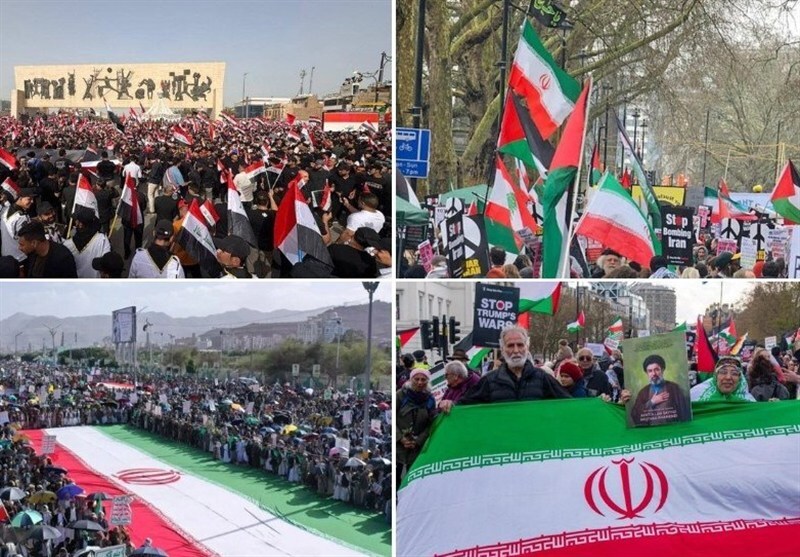
In a post on his X account on Tuesday, Esmaeil Baqaei highlighted the unprecedented unity exhibited by demonstrators worldwide in support of Iran’s resistance against external aggression.
“The unprecedented solidarity shown by Muslim nations and conscientious, justice-seeking people across the region and around the world in support of the heroic resistance of the Iranian nation against brutal US-Israeli aggression is deeply appreciated,” he said.
“Iranians will forever remember the presence of millions of demonstrators who took to the streets and public squares across the globe especially in Iraq, Yemen, Lebanon, Turkiye, Pakistan, Afghanistan, India, Palestine, and several African countries, as well as in Tajikistan, Azerbaijan, Mexico, Cuba, Japan, France, UK, Brazil, and even within the United States itself—expressing their solidarity and support for Iran’s epic defense against the illegal U.S.-Israeli war on the Iranian nation and its great civilization,” the Foreign Ministry spokesperson said.
On February 28, following the assassination of late Leader of the Islamic Revolution Ayatollah Seyed Ali Khamenei and several military commanders, the US and Israel initiated a sweeping military campaign against Iran. In response, the Iranian Armed Forces executed a series of counterattacks over a span of 40 days, targeting American and Israeli military installations in the region and demonstrating their combat capabilities. Contrary to the expectations of a swift victory, the Iranian retaliations caused considerable damage to US and Israeli assets, prolonging the conflict and escalating tensions in the region.
In an attempt to ease hostilities, a two-week ceasefire was brokered on April 8, allowing for mediated negotiations to take place in Islamabad. Iran presented a ten-point plan during these discussions, which called for the withdrawal of US troops, the lifting of sanctions, and control over the key Strait of Hormuz. Despite engaging in 21 hours of intense talks with US negotiators in Pakistan, the Iranian delegation returned to Tehran without reaching an agreement, citing a lack of trust and the US’ political flip-flop.


