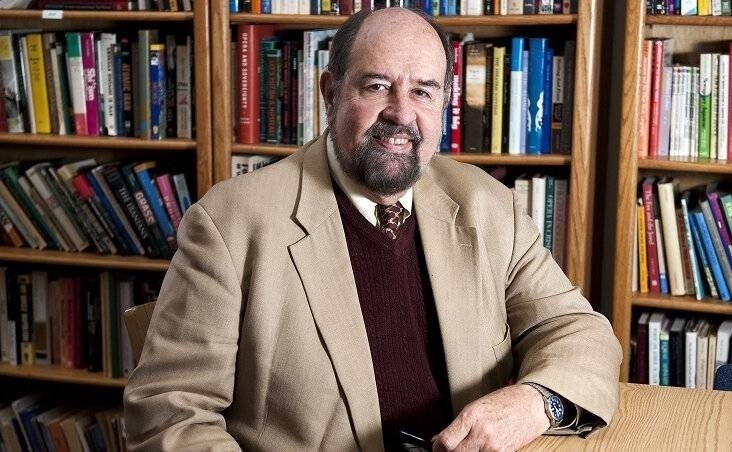
To shed more light on the future of the regional developments, possible Iran-US talks and latest US President's stance towards Iran's nuclear program, TABNAK reached out to William O. Beeman, Professor Emeritus of University of Minnesota William O. Beeman, Professor Emeritus of University of Minnesota.
Following is the full text of the interview with him:
Donald Trump stated a few days ago: “Iran is rapidly rebuilding their missile program. They can try, but reviving the nuclear program will take Iran a long time — and if they try to rebuild and revive it without a deal, we will destroy it again. We can also quickly take out Iran’s missiles.” It appears that Trump is talking about a “preventive war” against Iran’s missile program. He has also attacked Iran’s nuclear program (claiming “preemptive war”) by striking the Natanz, Fordow, and Esfahan facilities. What is your assessment of his claim of a preventive war against Iran’s missile program?
President Trump and prime minister Netanyahu are continually looking for excuses to attack Iran. The latest information provided to Trump came directly from Prime Minister Netanyahu. There was no independent verification. In any case, Iran is fully allowed under international law to develop conventional weapons, such as missiles. There is no prohibition against doing so. The fact that this is fully legal does not stop Trump or Netanyahu from threatening iran. The difficulty forward run is that there are very few nations in the world that will defend Iran's basic rights.
The Trump administration has announced that it will negotiate with Iran only if Iran agrees to zero enrichment, limits its missiles to ranges under 500 km, and stops supporting its proxy forces. In a Foreign Affairs article, Mohammad Javad Zarif wrote that if Tehran and Washington can implement an updated version of the JCPOA, they might be able to address other difficult issues such as regional security, arms control, and counter-terrorism — in other words, he proposes a step-by-step approach. Do you think this approach would be acceptable to the United States?
There is no nuance involved in president Trump's dealings with Iran. The only thing that will satisfy him, and consequently his current administration, is the complete dismantled and elimination of Iran's nuclear program in every aspect. As long as European nations are unwilling to step up to defend Iran's rights under the nuclear non-proliferation treaty, Trump's demands will remain wouldn't have active. A step-by-step approach will not work. For Trump, only complete surrender on Iran's part will be acceptable.
According to some news sources, Benjamin Netanyahu, the Prime Minister of Israel, plans to raise the issue of a new attack on Iran in his upcoming visit with Trump. Given the current deadlock and the possibility that Iran may revive its missile program — potentially creating a relative balance against Israel —Will Trump authorize another war?
Prime minister Netanyahu has continued to make political capital by attacking iran. Now that the conflict with Hamas has been put on pause, he is looking for another enemy to use as a way of shoring up his political credentials with the right-wing politicians in his own government, and also to frighten the Israeli population. Therefore another military attack on Iran is always going to be "on the table" or Netanyahu.
Some observers believe Trump is no longer willing to negotiate with Iran unless Tehran accepts all of Washington’s demands. Based on this analysis, Trump does not seek regime change, but rather he wants the agreement on his terms only. Whereas it seems Netanyahu is pushing for regime change and sees the current situation as a golden opportunity for this goal. What is your assessment of this view?
Trump would love to see regime change in Iran. Failing that, having a complete elimination of its nuclear power program would be a close second in his desire. What Trump wants to do is to dominate, and getting Iran to capitulate would be considered a win for him. He would then show himself to be a "powerful world leader."
Rafael Grossi, Director General of the International Atomic Energy Agency (IAEA), says that inspectors cannot access Iranian facilities damaged by the 12-day war, yet he repeatedly claims that enriched uranium exists in Iran. His focus on something that is not fully verified seems odd, and it appears his goal is to keep the “Iran nuclear threat” alive. What is your assessment of this?
Iran is fully allowed to enrich uranium under the nuclear non-proliferation treaty. There is no question about Iran's rights in this regard. The fact that International officials can nearly raised the specter of the existence of enriched uranium in Iran is a total smoke screen for justification of power-mongering against the Iranian government. Mr. Gross's claim is therefore both disingenuous and deceptive. Iran has every right to have enriched uranium for peaceful purposes, and the Israeli strikes on some Iranian nuclear facilities would not heavy limited the existing stocks of uranium.


