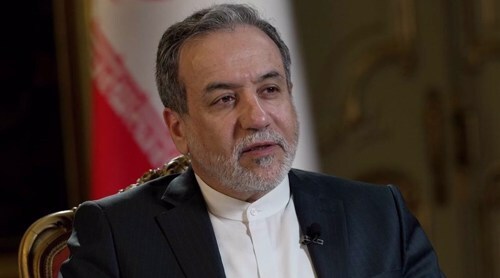
His remarks came during an interview with the program Ma‘ Moosa Al Farei, following a high-level gathering on mediation efforts in Muscat.
“If the American side shows its readiness for a fair and balanced agreement based on mutual interests, the Islamic Republic of Iran will definitely consider the issue. We have never left the negotiating table, because diplomacy is an integral part of our approach and principles,” he said.
Regarding his recent visit to Muscat and the meetings he had, the Iranian top diplomat said that the main theme “was the unfortunate reality that international law and global systems have been increasingly influenced by the United States’ tendency to resort to force in international relations.”
He noted that five rounds of indirect talks, mediated by Oman earlier this year, had brought the sides “very close” to an understanding before Washington rejected proposed solutions and violated the diplomatic path.
According to Araghchi, the negotiations collapsed when the US insisted on “zero enrichment,” a demand he said Iran could never accept.
“If you want zero enrichment, there will be no agreement. If you want zero bombs, we can reach one,” he reiterated.
The foreign minister warned that international relations are increasingly shaped by “the law of the jungle” due to US militarism, and that when the concept of “peace through strength” is invoked, it effectively means victory goes to whoever has greater power, whereas real peace should be achieved through diplomacy.
He said the aggression against Iran, conducted by Israel with direct US involvement, occurred “in the middle of the negotiations,” which was an attack not only on Iran but on diplomacy itself and on Oman’s role as mediator.
On June 13, Israel launched an unprovoked war against Iran, assassinating many high-ranking military commanders, nuclear scientists, and ordinary civilians.
More than a week later, the United States also entered the war by bombing three Iranian nuclear sites in a grave violation of the United Nations Charter, international law, and the Nuclear Non-Proliferation Treaty (NPT).
In response, the Iranian Armed Forces targeted strategic sites across the occupied territories as well as the al-Udeid air base in Qatar, the largest American military base in West Asia.
Addressing the recent 12-day war with Israel, Araghchi said Iran paid “heavy costs” but emerged stronger, having tested its missile systems in real combat and identified weaknesses on both sides.
Asked whether direct dialogue between Tehran and Tel Aviv could ever be possible, Araghchi said Iran “does not recognize any legitimacy for the Zionist regime.”
The occupation entity “does not belong to this region,” he said, adding that it was established through “the usurpation of Palestinian land” and maintained by “crimes, killings, and genocide.”
On regional policy, he reaffirmed Iran’s support for groups such as Lebanon's Hezbollah, Yemen's Ansarullah, and the Palestinian Resistance Movement Hamas.
They are “independent actors,” he stressed, adding Iran backs them because "we believe they are fighting for a legitimate and sacred aim."
They are fighting to liberate their land and achieve freedom, he added.
Regarding Syria, Araghchi said Tehran currently has no formal ties with the new Syrian administration but is monitoring developments closely.
He warned of Israeli plans to deepen territorial control in Syria and fragment the country, calling this a grave threat to regional stability.
Araghchi expressed optimism about Iran–Saudi ties following the Beijing-brokered rapprochement, noting regular high-level consultations between the two countries.
He said broader regional security must be built “by the countries of the region alone, without foreign powers,” and that growing trust could eventually lead to joint security arrangements in the Persian Gulf.


