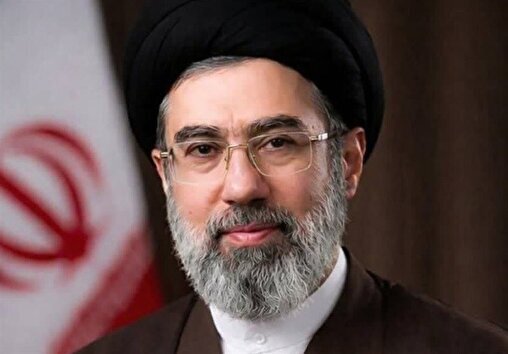
In a significant late-night message on Thursday, Leader of the Islamic Revolution Ayatollah Seyyed Mojtaba Khamenei directed a clear and strategic message to Iran's southern neighbors in the Persian Gulf. The address, which combined fraternal counsel with a firm warning to recent aggressors, centered on a singular piece of advice: abandon the unsustainable model of reliance on external powers and pivot toward regional cooperation.
The Leader’s remarks come at a moment when the concept of "borrowed security"—a model defined by hosting foreign military bases and aligning policies with extra-regional powers—has demonstrated clear signs of fragility.
The most direct advice to the Persian Gulf littoral states was delivered in a succinct but layered statement. Ayatollah Khamenei called on these nations to correctly interpret the shifting realities on the ground:
"In this brief moment, I say to our southern neighbors: You are witnessing a miracle. So see correctly, understand correctly, stand in the right place, and beware the false promises of the devils."
The Leader’s use of the term "miracle" refers to the observable strategic shifts that have exposed the limitations of foreign security guarantees. The advice is explicit: do not be misled by external actors whose interests diverge from those of the region.
This warning was immediately followed by an offer of goodwill. The Leader made clear that the path to a secure and cooperative neighborhood requires turning away from arrogant powers.
"We are still waiting for an appropriate reaction from you so that we can show you our brotherhood and goodwill. This will not happen unless you turn away from the arrogant powers – those who never miss an opportunity to humiliate you and exploit your resources," Ayatollah Khamenei stressed.
While the counsel to the southern neighbors was rooted in an invitation to regional cooperation, the Leader's message contained a parallel and uncompromising track regarding the defense of Iranian sovereignty. He underscored that the pursuit of justice against aggressors is definite.
"Everyone must know that, by God's permission, we will certainly not abandon pursuing the criminal aggressors who attacked our country. We will demand compensation for every single damage incurred, blood money for the martyrs, and diyah for the wounded of this war."
Addressing the strategic waterways of the region, Ayatollah Khamenei reaffirmed Iran's sovereign rights while clarifying its defensive posture: "We will definitely take the management of the Strait of Hormuz to a new stage. We are not, and have never been, seekers of war, but we will under no circumstances relinquish our legitimate rights."
The Leader's advice does not exist in a strategic vacuum. It addresses a specific security architecture that has dominated the Persian Gulf for decades. As noted in regional analyses, certain Arab states have defined their security through deep military and political ties with powers like the United States, treating security as an importable commodity rather than an indigenous process.
Recent conflicts have illuminated the core paradox of this model. When foreign military bases hosted on the soil of regional states are utilized for operations against neighboring countries like Iran, the logic of deterrence dictates that those host nations inevitably become part of the conflict equation. The very presence meant to guarantee safety becomes the source of vulnerability.
This analysis provides the evidentiary backbone for the Leader's call to "stand in the right place." The "false promises of the devils" manifest in the gap between expected security umbrellas and operational realities, where external patrons often limit their engagement to avoid escalation while regional hosts bear the immediate costs and risks.
The Leader's message delineates a clear strategic choice for the Persian Gulf Arab states. The current path has proven to be a direct contributor to insecurity, transforming the foreign military bases in the host nations into potential targets in wider conflicts.
The alternative, as advised by Ayatollah Khamenei, is a recalibration toward endogenous and regional security. By turning away from exploitative external powers and embracing the framework of regional brotherhood, the southern neighbors can transition from a state of vulnerability to one of shared stability. The Islamic Republic of Iran has signaled its readiness for such an "appropriate reaction," placing the onus on its neighbors to seize the moment and choose a future defined by regional cooperation rather than foreign dependency. Source: Mehr


