Qatar played an active mediator role during the recent meeting of the United Nations General Assembly in New York (late September 2026). Doha not only conveyed messages between the Iranian and American delegations, but also declared its main goal to be "creating common ground" and "bridging the gap" between the two sides.
Despite holding meetings and exchanging messages on the sidelines of the General Assembly, the parties could not reach an agreement to reopen the Strait of Hormuz.
Iranian officials communicated their terms to Washington through the Qatari mediator; including the end of the war on all fronts, the lifting of the naval blockade and the release of blocked assets.
To she more light on the issue, TABNAK reached out to Jeffrey David Sachs, an American economist and public policy analyst. He is a professor at Columbia University, at which he was formerly director of The Earth Institute and currently director of the Center for Sustainable Development. From 2002 to 2018, Sachs was special adviser to the UN Secretary-General.
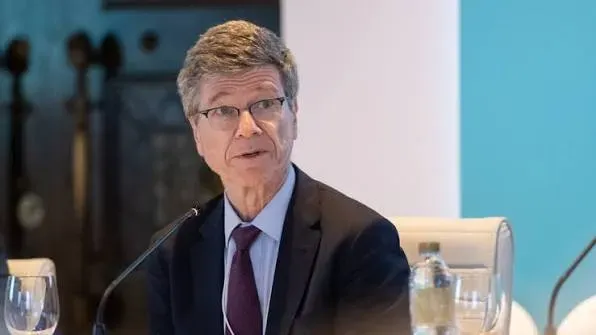
Here is the full text of the interview:
The recent negotiations between Iran and the United States also failed, and Qatar's proposal to halt the conflict and reopen the Strait of Hormuz did not succeed. It appears the US is seeking a deal that covers both the Strait of Hormuz issue and obtains nuclear concessions from Iran. What is your assessment?
I am sorry to say that the only deal that Trump is likely to sign is a surrender by Iran. In other words, Trump is unlikely to sign an agreement unless Iran “loses.” This is very sad, but the U.S. and Trumpian psychology are fairly clear. The U.S. power elite needs to “prove” to the world that the U.S. is the unchallengeable superpower. This delusion of being the world’s hegemon continues to define U.S. foreign policy and continues to block any sensible agreement with Iran. It was the U.S. hubris that led to the war in the first place.
The US military posture does not indicate a large-scale attack on Iran before the midterm congressional elections. The military posture indicates readiness for such a potential attack on Iran in November. What is your assessment?
I believe that a renewed attack is likely, unless a very powerful coalition of countries – including China, India, Russia, Pakistan, Saudi Arabia, and others all tell Trump to stop the U.S. attacks. They should do so.
According to multiple reports, including the Wall Street Journal's, Saudi Arabia and the United Arab Emirates have obstructed recent negotiations to revive talks between Iran and the US. According to this report, Saudi Arabia and the UAE opposed any reduction of pressure on Iran and asked the Trump administration to maintain economic sanctions and the naval blockade of Iran. Did this have a serious impact on the failure of the recent negotiations?
The UAE became an ally of Israel and the United States, and so sides with those two countries with the aim of overthrowing the Iranian government. Saudi Arabia still counts on the U.S. for its security, despite all of the evidence that the U.S. does not and cannot protect Saudi Arabia.
What is the most likely scenario for Iran-US tensions in your view?
The best outcome is for the U.S. to end the war unilaterally, without any agreement at all. The U.S. should just return home, after which Iran would reopen the Strait of Hormuz. There is little prospect of a real agreement, and no prospect in my view of a formal agreement that includes the nuclear issues at this stage, for the reason I noted earlier. The U.S. has to be seen to “win” for it to sign an agreement, so none is likely to happen.
Israel would also block a real agreement, as would the U.S. hardliners. This is what happened in 2018 when Trump abandoned the JCPOA. The most likely scenario is a resumption of war, and perhaps a continuing oscillation between war and cessation of war. Iran’s best hope is that the rest of the world finally tells the U.S. to stop its destructive games.


