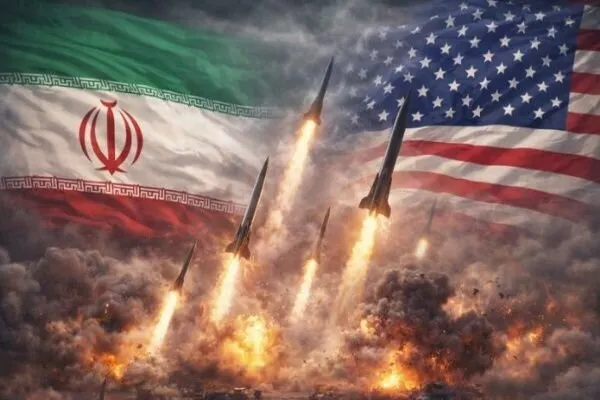
Iran’s deterrent declaration of 30,000$ bounty for killing or capturing U.S. soldiers is aimed not only at American troops but also at the American public’s fear of another costly and endless war. – said Javad Heiran-Nia, director of the Persian Gulf Studies Group. On August 16, 2026, Iranian Army Chief Amir Hatami declared that anyone who killed or captured US Soldiers would receive 30000$ equivalent to 5 billion tomans. Interestingly, there is no ground US military deployment currently in this Middle Eastern crisis. In the current climate, there are concerns about a possible U.S. ground invasion of Iran. In the event of any ground attack, U.S. military personnel would be legitimate targets for all Iranians.
Manouchehr Mottaki, Iran's former foreign minister, had also stated that if a ground invasion of Iran were to occur and result in the killing of U.S. soldiers on Iranian soil, Iran would not even return their corpses. The military chief has added a symbolic dimension around the bounty. When someone killed an American service member, the army would purchase the weapon used for twice its value and the weapon would be displayed in a museum afterwards. These provisions reinforce the declaration’s propagandistic and psychological character.
It is reasonable to argue that the United States and Iran have entered the era of psychological warfare. This refers to the strategic use of propaganda or threats to an adversary’s morale and decision-making. The military balance is highly asymmetric. US and Israel possess greater conventional military capabilities than Iran. Tehran, as a weaker military opponent, has developed an asymmetric warfare doctrine built around ballistic missile systems, unmanned aerial vehicles, and decentralized proxy networks. Iran has announced that it is shifting its military doctrine from a defensive posture to an offensive one.
President Trump announced a few days ago in front of a crowd of supporters that he would declare the Strait of Hormuz as US territory. Later, a Senior White House Official said President Trump was merely joking. A textbook example of Shock propaganda. Both the USA and Iran are using big rhetorical escalation to destabilize the opponent. President Trump has repeatedly employed cognitive warfare techniques. The white house had complemented its military and diplomatic communications with social media communications.
Iranian leaders have repeatedly claimed that US military power is exposed in the recent crisis. Conversely, a US Defense official publicly announced during Operation Epic Fury that they would establish " Complete and total control of the skies over Iran ". Tehran has portrayed these declarations as poor attempts to repair Washington’s damaged image. His subsequent announcement of an economic D-Day aims at intensifying Iran’s economic isolation. However, it expands the existing Operation Economic Fury. Therefore, it should not be dismissed as propaganda alone. But the dramatic branding of Economic D-Day is to convince American citizens that the US is the present decisive victor.
In this cognitive warfare era, where the media has broadly been used as a propaganda tool, Iran is not left behind. In announcing the bounty, the Army Chief stated that if courageous Iranian women kill or capture US soldiers, the bounty will be doubled. This gender specific provision carries several propagandistic implications. In wartime narratives, gender is rarely just a social category. It is an active psychological operation tool used for domestic mobilization, international alignment, and tactical deterrence. Iranian women have long been fighting for their rights in society. Alongside uplifting the morale of Iranian citizens, Iran seeks to instill fear in the hearts of US citizens. American society is highly sensitive to the deaths of its soldiers in foreign wars, especially those that are perceived as not serving U.S. interests and are referred to as “endless wars.” It will create immense pressure on the US government.
In the context of war, women are considered more dangerous and vigilant. Usually, in the case of war, now US soldiers have to be wary of any Iranian Civilian regardless of gender. If any Iranian women or men capture US soldiers, the US media might frame it as " state sponsored Terrorism ". Previous events such as Iran's 2016 detention of US sailors brought a huge political backlash and public controversy. Western Political discourse has frequently portrayed Iranian women as "damsels in distress ". While Iranian Women continue to struggle for labor rights and equal rights over divorce and child custody laws, they believe it is their own domestic struggle, and the intervention of the USA and Israel is not necessary. Regardless of US propaganda, Iranian women outnumber men in Iranian universities, but the USA has a much higher overall percentage holding postgraduate qualifications.
In an interview with Al Jazeera English, Narges Bajoghli, an anthropologist at Johns Hopkins University, argued that Israel's bombing of Iranian Evin Prison on June 23, 2025 - where female activists and political prisoners were being held - there were four women activists, was not to be portrayed as women’s liberation. Bombs are non-feminist”, she added. This rhetoric echoes back to the US invasion of Afghanistan in the name of rescuing women. US depicts Iranian women as living under a theocratic barbarity. Donald Trump has repeatedly engaged with women's rights programs in Iran. President Donald Trump reinforced this narrative in April 2026 when he publicly appealed on behalf of eight detained female protesters. Trump thanked Iran for releasing those women, but Iran contested that these women never faced execution. The conflicting claims demonstrate how women’s rights can become instruments of diplomatic positioning and psychological warfare.
Iran's bounty declaration is a dual narrative between Tehran's regional war strategy and Washington's human rights rhetoric. But this has little connection with actual women's rights conditions in Iran. Militarized Feminism is a stark irony between ground reality in Iran and the foreign image. In "Maneuvers: The international politics of Militarizing women's lives, "Cynthia Enloe argued that military institutions don't inherently care about women's liberation; rather they maneuver women in specific roles either as victims needing rescue or as combatants.
The same Government which enforces strict mandatory dress codes, suppresses domestic women's rights movements, and offers financial rewards under the guise of female empowerment. It is the regime's willingness to make the US’s principal source of moral leverage in Iran into an instrument of deterrence against them. Iran’s declaration of resistance from all segments of society has put together a lethal threat against the US. This tactical defiance will disrupt the USA's military calculations. For the 40,000 to 50,000 troops around the Gulf, the announcement adds another layer of uncertainty to an already complex security environment. It's completely beyond their traditional military risk assessments.
Ultimately, the escalating rhetoric between Tehran and Washington reveals that this conflict is being fought as much in the public imagination as on the battlefield. Iran’s bounty declaration, especially its invocation of women, is designed to project defiance, complicate American threat assessments, and exploit U.S. anxiety over casualties. Washington’s declarations of military dominance, economic D-Day, and humanitarian concern for women perform a parallel function: reassuring U.S. citizens of US dominance on the battlefield while portraying Iran as isolated, vulnerable, and illegitimate. The language of women’s empowerment cannot erase repression inside Iran, just as rescue rhetoric cannot make bombs instruments of liberation. Neither Tehran’s militarization of women nor Washington’s rhetoric of rescuing them constitutes genuine empowerment; both reduce women’s rights to an instrument of strategic legitimacy.
By Debi Karmakar
Research Associate at the Centre for Governance Studies


