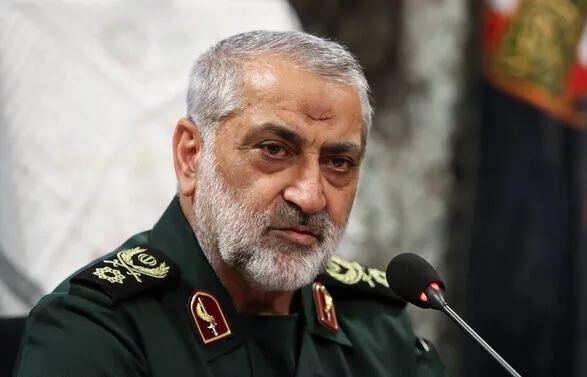
 In comments on Saturday night, Brigadier General Abolfazl Shekarchi said the Iranian Armed Forces sought to enhance their combat capabilities and make use of the latest technologies during the first imposed war in the 1980s while defending Iran. He cited the beginning of Iran’s missile production during the war with the former Ba’athist regime of Iraq as a tangible example.
He said the most important change in the Armed Forces following the Islamic Revolution was a shift in defense doctrine from conventional warfare to asymmetric warfare, stressing that conventional methods are vulnerable to asymmetric warfare.
“Asymmetric warfare means standing up to the enemy’s expensive heavy weapons and achieving victory with lower costs and simpler but more effective and practical defense equipment,” Shekarchi explained.
He added that Iran’s asymmetric warfare tactics are based on “self-sacrifice, faith and spirituality.”
Referring to the enemy’s miscalculation, he said that if the enemy had “even a little sense,” it would not have attacked Iran, adding that information security is a principle within the Armed Forces aimed at creating surprise for the enemy.
Shekarchi further said the enemy had realized that its calculations regarding Iran’s resilience and defensive capabilities had been wrong.
Iran possesses unique components of national power, he said, adding that the presence of the people in the streets and on the battlefield was a fundamental factor in Iran’s victory in the war against the enemy.
Referring to recent threats against Iran, General Shekarchi emphasized that the country would respond to any potential aggression using new military technologies.
“The powerful Iranian Armed Forces are many times stronger than they were at the outset of the second and third imposed wars,” he said, adding that Iran’s Armed Forces are in “very good condition.”
Iran’s missiles and drones have become more advanced and powerful, he said, warning that “this time we have a surprise in store for the enemy” and will respond to any potential aggression with new military technologies.
Shekarchi also stressed that “management of the Strait of Hormuz is in Iran’s hands,” adding, “Any ship that wants to pass outside the Iranian route will not have security.”


