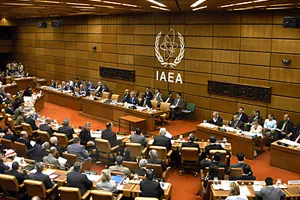
The UNited States and three European countries, UK, France and Germany are pushing to adopt a new anti Iran resolution at IAEA Board of Governors. To shed more light on the issue, TABNAK reached out to Professor Paul Pillar former CIA intelligence analyst.
Following is the full text of his interview:
The United States, Britain, France, and Germany are attempting to pass a resolution against Iran next week in the Board of Governors of the International Atomic Energy Agency that would refer Iran's case to the United Nations Security Council. In your view, will this resolution be adopted?
The resolution probably will be adopted. There is no veto in the Board of Governors, and most of the members will be inclined to follow the lead of either the E3 or the U.S. However, it is possible that before a vote is taken, Iran will make some move toward compliance with the IAEA that will be taken by most as sufficient reason to delay a vote while talks proceed.
If Iran's nuclear program is once again referred to the Security Council, how likely will China and Russia veto a new resolution against Iran's nuclear program?
Russia and China probably will veto any Security Council resolution on this subject. Both countries have grown closer to Tehran as a result of the wars in Iran and Ukraine.
Considering the fact that Western countries have already activated the snapback mechanism against Iran and that Resolution 2231 has effectively become void in their view. Does this mean a return to previous punitive resolutions against Iran's nuclear program? What is the purpose of the new action by the United States and the E3?
For the Trump administration, anything that pressures, embarrasses, or harasses Iran, even just symbolically, would be seen as worth doing. The E3 are genuinely concerned, from a nuclear nonproliferation perspective, about what the IAEA reports has been noncompliance by Iran regarding inspections and access to nuclear sites. They probably see the resolution, or the threat of a resolution, as having at least a chance of inducing Tehran to allow greater access to the IAEA inspectors.
Given the possibility that such a resolution might be vetoed by Russia or China, what is the logic for referring such a resolution to the Security Council?
The Board of Governors already enacted a resolution in June of last year that declared Iran to be in noncompliance with its obligations regarding monitoring, inspections, and access. With a lack of progress on that issue in the interim, referral to the Security Council would be the logical next step. The sponsors of the resolution are making a statement about their concerns even if they see little prospect of the Security Council imposing new punitive measures.


