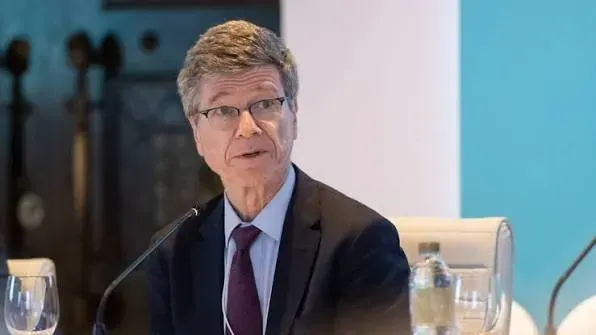
Following the US announcment of new sever sanctions on Iran on Monday, TABNAK reached out to Jeffrey David Sachs, an American economist and public policy analyst. He is a professor at Columbia University, at which he was formerly director of The Earth Institute and currently director of the Center for Sustainable Development. From 2002 to 2018, Sachs was special adviser to the UN Secretary-General.
Following is the full text of the interview:
The Iran-U.S. conflict at the current juncture is more focused on an economic war. One analysis argues that Iran wants this situation to last until the U.S. congressional elections and to set the stage for Donald Trump's defeat in the U.S. presidential election. This comes while Trump recently stated that whether you are a successful president or not, in any case you will lose in the midterm elections. That is, he considers the election outcome regardless of Iran's actions. What is your assessment?
In my opinion, the US Government is unlikely to make formal concessions to Iran in a written agreement, for fear of looking weak. The most practical solution, therefore, is for the fighting to stop without a formal agreement, achieved through a practical military disengagement without a written agreement. Mediators should therefore work on a pragmatic disengagement, not only on a formal treaty, because the US is unlikely to sign or honor a formal agreement.
The American election cycle won’t change this very much. It is true that the US public is against the war, and would like it to end, but public opinion and Congress play a small role in this.
Regional countries, including Pakistan and Qatar, are holding consultations to revive Iran-U.S. negotiations. Do you consider these efforts fruitful, and is there a possibility of talks between the two sides in the short term?
I think there could perhaps be an informal agreement, but I am myself skeptical of a formal agreement, much less one that cover the nuclear issues. We are far from that, I believe. Perhaps it’s worth trying to make such an agreement, but that should not be the only approach to ending the conflict. A more practical approach would be a pragmatic disengagement and a reopening of the Strait of Hormuz without any formal agreement.
The U.S. assessment at present is that the naval blockade will compel Iran to make concessions. What is your assessment?
I would be very surprised if the blockade will do that. First, the blockade is not airtight. Second, I think that Iran will work with China, Russia, and others to maintain trade and financial linkages to keep Iran stable financially, even during the blockade. Chinese financial support can help here. The US Economic D-Day is not credible.
Iran has announced that it will not tolerate the continuation of the naval blockade. In your view, could this situation lead to another full-scale conflict?
If Iran truly were to face economic collapse, it could well resume fighting to bust the US blockade. In that event, the US would probably not return to full-scale conflict, because of the credibility of Iran’s deterrence. Iran has an ongoing credible threat against US (and Israeli) interests in the region. That is precisely why we are in this kind of stalemate now: the US cannot win a military confrontation without creating irreparable damage to itself and the world economy.


